
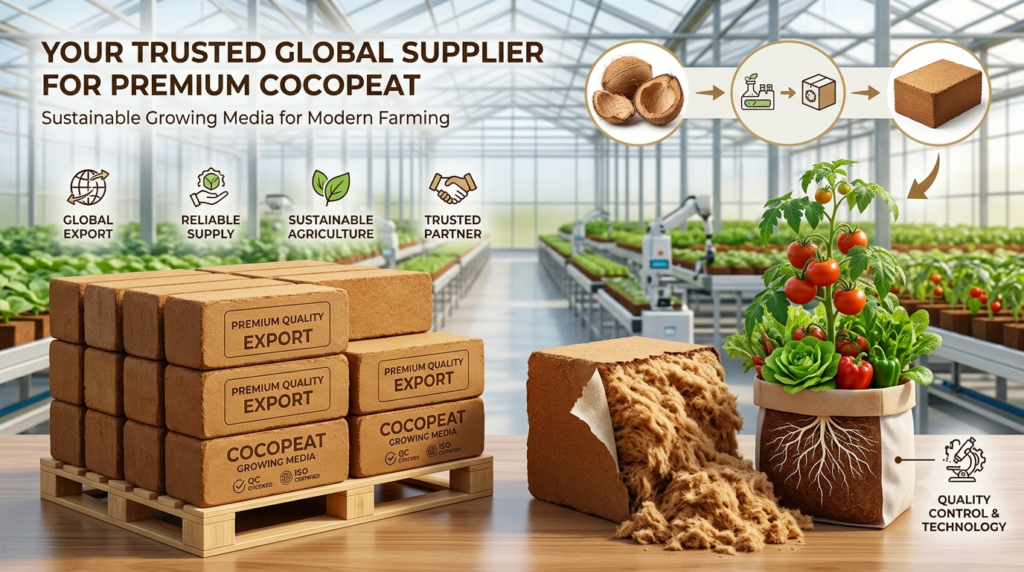
Cocopeat block has become one of the most popular growing media among farmers, gardeners, and hydroponic growers worldwide. Made from coconut husk fiber, cocopeat provides a natural, sustainable, and efficient solution for plant cultivation.
Many agricultural businesses, greenhouse operators, and home growers choose cocopeat blocks because they are easy to transport, store, and use. However, beginners often ask: How do you use a cocopeat block correctly?
Understanding the preparation process, applications, and benefits of cocopeat blocks helps growers achieve better plant growth and make the right purchasing decisions.
What Is a Cocopeat Block?
A cocopeat block is compressed coconut coir material made from processed coconut husks. During production, manufacturers remove unwanted fibers and impurities before compressing the cocopeat into compact blocks.
Because the material is compressed, one small block can expand significantly when mixed with water.
This makes cocopeat blocks highly practical for international shipping because they require less storage space compared with loose growing media.
After expansion, cocopeat creates a soft, lightweight growing medium that supports healthy root development.
Why Do Growers Use Cocopeat Blocks?
Cocopeat blocks offer many advantages for modern agriculture.
- Easy Storage and Transportation
One of the biggest benefits of cocopeat blocks is their compact size.
Compared with traditional soil or loose growing media, compressed cocopeat blocks require less space during transportation.
Therefore, international buyers prefer cocopeat blocks because they reduce shipping volume and handling costs.
- Excellent Water Retention
Cocopeat can absorb and hold a large amount of water while maintaining good airflow.
As a result, plants receive consistent moisture without creating excessive water conditions around the roots.
This feature makes cocopeat suitable for:
Hydroponic farming
Greenhouse cultivation
Nursery production
Home gardening
- Better Root Environment
Healthy plants require oxygen around their roots. However, some growing materials become compact and reduce airflow.
Cocopeat creates a naturally porous environment that allows roots to breathe and expand.
Because of this, plants can develop stronger root systems and improve nutrient absorption.
How to Prepare a Cocopeat Block Before Use
Using a cocopeat block is simple, but proper preparation ensures the best growing results.
Step 1: Choose a High-Quality Cocopeat Block
Before preparation, select premium cocopeat from a reliable supplier.
High-quality cocopeat should have:
Low salt content
Proper washing process
Suitable EC level
Clean appearance
Consistent texture
For professional farming, buyers should choose cocopeat that has been tested and prepared specifically for agricultural use.
Step 2: Add Water to Expand the Block
Place the cocopeat block inside a large container or clean growing area.
Slowly add water to the block and allow it to absorb moisture.
Within several minutes, the compressed block will begin expanding.
Depending on the block size, one cocopeat block can expand into several liters of loose cocopeat.
Furthermore, using warm or clean water can help the expansion process happen more evenly.
Step 3: Break Apart the Expanded Cocopeat
After the block fully expands, separate the cocopeat manually.
Remove any remaining hard pieces and make sure the texture becomes loose and soft.
The ideal cocopeat texture should feel:
Light
Moist
Airy
Easy to handle
At this stage, the cocopeat is ready to use as a growing medium.
How to Use Cocopeat Block for Different Growing Systems
Cocopeat blocks work well in various agricultural applications.
Using Cocopeat Block for Hydroponics
Hydroponic growers commonly use cocopeat as a replacement for soil.
In hydroponic systems, cocopeat supports plant roots while growers provide nutrients through water solutions.
Farmers often use cocopeat blocks for crops such as:
Tomatoes
Cucumbers
Strawberries
Lettuce
Peppers
Herbs
Moreover, cocopeat allows growers to control water and nutrients more accurately.
Using Cocopeat Block for Potted Plants
Gardeners can mix expanded cocopeat with other materials or use it as a standalone growing medium.
For container plants, cocopeat improves:
Soil structure
Moisture control
Root development
Drainage performance
As a result, plants can grow in a healthier environment.
Using Cocopeat Block for Seedlings
Nurseries widely use cocopeat for seed germination and young plants.
Because cocopeat provides a soft environment, small roots can develop without resistance.
In addition, its moisture retention helps maintain suitable conditions during early growth stages.
Should Cocopeat Block Be Mixed With Soil?
Cocopeat blocks can be used alone or combined with other growing materials.
Many commercial growers use 100% cocopeat because it provides excellent control over water and nutrients.
However, some gardeners mix cocopeat with:
Compost
Organic fertilizer
Soil
Perlite
Other growing media
The best option depends on the crop type and farming system.
For hydroponic applications, pure cocopeat is often preferred because growers can manage nutrients more precisely.
Do Cocopeat Blocks Need Fertilizer?
Cocopeat improves the physical growing environment, but it does not provide complete plant nutrition.
Plants still require essential nutrients such as:
Nitrogen
Phosphorus
Potassium
Calcium
Magnesium
Therefore, growers should provide fertilizer according to plant requirements.
For commercial hydroponic farms, using premium buffered cocopeat together with a balanced nutrient solution produces better results.
What Makes Premium Cocopeat Blocks Different?
Not every cocopeat block offers the same quality.
Professional buyers should consider several important factors.
Low EC Cocopeat
Low electrical conductivity (EC) indicates lower salt levels.
This is important because excessive salts can negatively affect plant growth.
Proper Washing and Buffering
Premium suppliers wash and process cocopeat carefully to improve plant compatibility.
Buffered cocopeat provides better nutrient balance and supports healthier crops.
Consistent Expansion Rate
High-quality cocopeat blocks expand evenly and maintain good structure after hydration.
This consistency helps growers achieve predictable results.
Why International Buyers Choose Cocopeat Blocks
Cocopeat blocks have become a preferred choice for global agriculture because they combine convenience, sustainability, and performance.
International buyers choose cocopeat blocks because they offer:
Cost-effective shipping
Long storage life
Sustainable production
Easy handling
Excellent plant performance
Furthermore, cocopeat supports environmentally responsible farming by transforming coconut waste into valuable agricultural products.
Conclusion: How to Use Cocopeat Block Successfully
Using a cocopeat block is simple and effective. By adding water, expanding the material, and preparing it correctly, growers can create an excellent environment for plant growth.
Cocopeat blocks provide excellent moisture retention, root aeration, and sustainability, making them suitable for hydroponics, greenhouses, nurseries, and modern farming systems.
For international buyers searching for reliable growing media, choosing premium cocopeat blocks from a trusted supplier ensures better quality, consistent performance, and successful agricultural results.
Cocopeat is not only a convenient growing medium—it is a sustainable solution for the future of global farming.