
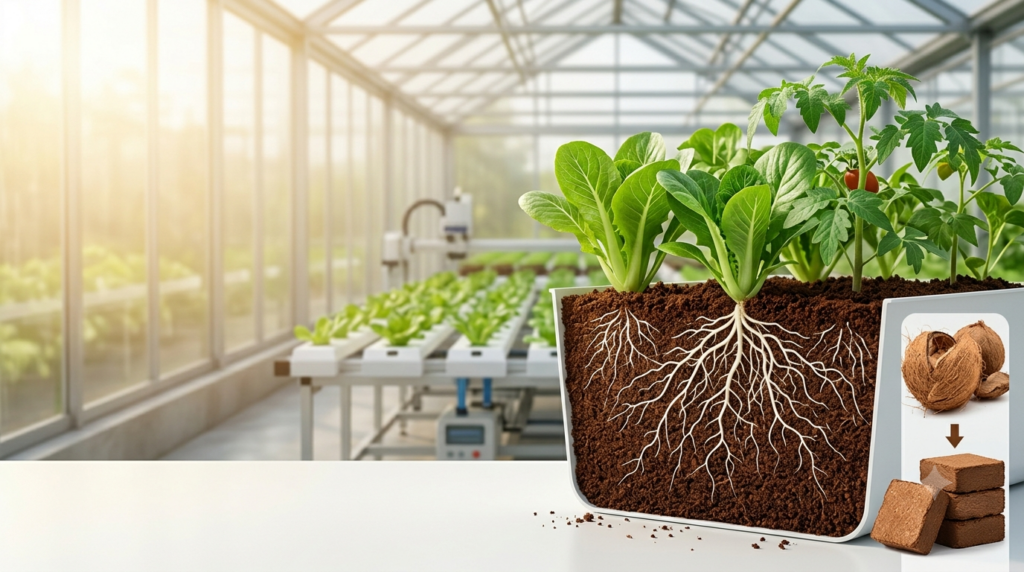
Cocopeat has become one of the most popular growing media in modern agriculture, hydroponics, nurseries, and greenhouse farming. Many growers around the world choose cocopeat because it is lightweight, sustainable, and provides excellent water retention for plant growth.
A common question among farmers, gardeners, and agricultural businesses is: Can I use only cocopeat for plants?
The answer is yes, cocopeat can be used as the only growing medium for many types of plants. However, understanding its properties, benefits, and limitations is important to achieve the best results. Choosing high-quality cocopeat with proper processing is also essential for professional growers who want consistent plant performance.
What Is Cocopeat?
Cocopeat is a natural growing medium made from coconut husk fibers. It is produced by processing coconut shells and separating the long fibers from the fine coconut dust. After cleaning, washing, drying, and compressing, cocopeat becomes a lightweight material commonly used in agriculture.
Unlike traditional soil, cocopeat does not contain heavy particles. Its unique structure allows it to hold moisture while still providing enough air space around plant roots.
Because it comes from renewable coconut waste, cocopeat is considered an environmentally friendly alternative to peat moss and other non-renewable growing media.
Can You Grow Plants Using Only Cocopeat?
Yes, many plants can grow successfully using 100% cocopeat without mixing it with soil. Cocopeat is widely used as a standalone growing medium in hydroponic systems, seed starting, greenhouse production, and container gardening.
When properly prepared, pure cocopeat provides several important conditions required for healthy root development:
Excellent moisture retention
Good air circulation around roots
Stable growing structure
Lightweight handling
Clean and natural growing environment
Many commercial growers use 100% cocopeat for crops such as:
Tomatoes
Strawberries
Cucumbers
Peppers
Lettuce
Herbs
Ornamental plants
Nursery seedlings
However, plants grown only in cocopeat require proper nutrient management because cocopeat itself contains limited nutrients.
Benefits of Using Only Cocopeat for Plants
- Excellent Water Retention
One of the biggest advantages of cocopeat is its ability to absorb and retain water. It can hold several times its weight in moisture while maintaining proper drainage.
This helps plants receive consistent hydration without creating waterlogged conditions that can damage roots.
For greenhouse growers and hydroponic farmers, this feature reduces water waste and improves irrigation efficiency.
- Better Root Growth
Healthy roots need both water and oxygen. Traditional soil can sometimes become compacted, reducing airflow around roots.
Cocopeat has a loose structure that creates air pockets, allowing roots to breathe and expand naturally. This results in stronger root systems and healthier plants.
- Sustainable and Eco-Friendly Growing Medium
Cocopeat is made from coconut husks, which are agricultural by-products. Instead of becoming waste, coconut husks are converted into valuable farming materials.
For international buyers looking for sustainable agriculture solutions, cocopeat is an attractive alternative to peat moss because it supports environmentally responsible farming practices.
- Clean and Easy to Handle
High-quality cocopeat is processed to remove impurities and unwanted materials. It is lightweight, easy to transport, and convenient for large-scale agricultural operations.
Compressed cocopeat blocks and bricks also reduce shipping volume, making them ideal for international export.
Does Cocopeat Provide Enough Nutrients?
Although cocopeat is an excellent growing medium, it is not considered a complete fertilizer.
Cocopeat mainly provides physical support for plants by improving moisture control and root aeration. It does not contain enough essential nutrients required for long-term plant growth.
When using 100% cocopeat, growers usually add nutrients through:
Liquid fertilizers
Hydroponic nutrient solutions
Organic fertilizers
Calcium and magnesium supplements
This is especially important because cocopeat naturally contains potassium and may require calcium and magnesium adjustments depending on the crop.
Professional growers often choose buffered cocopeat because it has been specially treated to improve nutrient balance and plant performance.
Should Cocopeat Be Mixed With Soil?
Mixing cocopeat with soil is optional. Some gardeners prefer combining cocopeat with compost, soil, or other organic materials to create a balanced growing mixture.
However, many commercial operations prefer using 100% cocopeat because it provides better control over:
Water supply
Nutrient delivery
Root environment
Growing conditions
For hydroponic systems, pure cocopeat is commonly preferred because growers can precisely control the nutrients delivered to plants.
What Type of Cocopeat Is Best for Professional Growing?
Not all cocopeat products have the same quality. For commercial agriculture and export purposes, buyers should look for premium cocopeat with:
Low EC Level
Electrical conductivity (EC) measures salt content. High salt levels can negatively affect plant growth. Premium cocopeat should have controlled EC levels suitable for agricultural use.
Proper Washing and Buffering
Good cocopeat suppliers wash and process their products to remove excess salts and improve plant compatibility.
Consistent Fiber Structure
High-quality cocopeat should have a balanced combination of fine particles and fiber materials to provide excellent water retention and aeration.
Reliable Packaging
For international buyers, proper compressed packaging helps reduce shipping costs while maintaining product quality.
Why Global Growers Choose Cocopeat
The demand for cocopeat continues to grow worldwide because farmers are searching for sustainable and efficient growing solutions.
Countries with greenhouse industries, hydroponic farms, and commercial nurseries increasingly use cocopeat because it offers:
Sustainable production
Improved plant management
Reduced water consumption
Easy transportation
Long-lasting growing performance
For businesses importing agricultural products, premium cocopeat from reliable suppliers provides a valuable solution for modern farming.
Conclusion: Can You Use Only Cocopeat for Plants?
Yes, you can use only cocopeat for plants, and many professional growers successfully use 100% cocopeat as their primary growing medium.
However, successful plant growth depends on using high-quality cocopeat and providing proper nutrients. Cocopeat offers excellent water retention, root aeration, sustainability, and convenience, making it one of the best choices for modern agriculture.
For growers, nurseries, and agricultural companies looking for a reliable growing medium, premium cocopeat is an excellent investment that supports healthier plants and sustainable farming practices.
If you are looking for high-quality cocopeat for commercial farming, greenhouse production, or export purposes, choosing a trusted cocopeat supplier ensures consistent quality and better growing results.